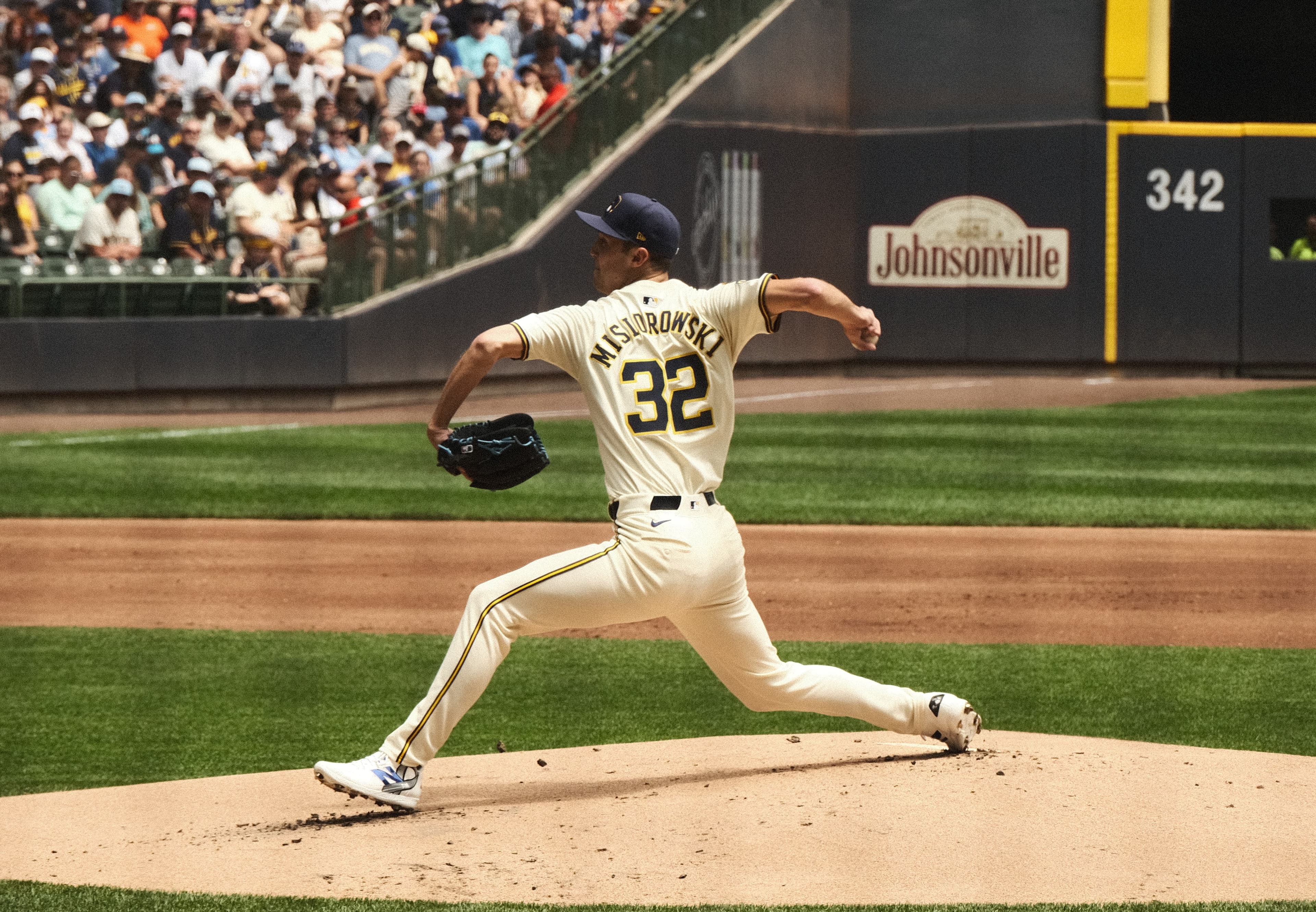
 Photo by Drovetochicago, CC BY-SA 4.0, via Wikimedia Commons
Two and Three-Tenths
Chris Sale has a 2.20 ERA and nine losses. The explanation is a single number: 2.3 runs of support per start since June 1, which has turned elite pitching into a study in structural futility.
Two point three.
That is the number of runs the Atlanta Braves have scored per game in Chris Sale's starts since June 1. His ERA across those starts has remained below 2.50. The arithmetic is obvious, and the outcome has been predictable: Sale pitches well enough to win, and the lineup declines to participate.
Friday night at American Family Field was the latest entry in a ledger that has stopped surprising and started accumulating weight. Sale threw six innings, allowed two earned runs on eight hits, struck out six. A quality start by every recognized definition. The Braves scored one run. Jacob Misiorowski — Milwaukee's 23-year-old with the hundred-mile-per-hour fastball — threw six scoreless innings of his own, reaching 103.1 on the gun, striking out six, and improving to 13-5 with a 1.68 ERA and 216 strikeouts, the most in baseball. His WHIP sits at 0.75, a number that belongs in a textbook, not a box score.
Sale fell to 12-9.
There is a version of this season where a 2.20 ERA occupies the center of a pennant race narrative, where the defense converts and the bats cooperate and the wins accumulate as they should. In that version, the runs arrive. They have not. When a pitcher allows two earned runs per nine innings and his lineup provides 2.3, the margin is three-tenths of a run — roughly the width of a bloop single finding grass instead of leather, a sacrifice fly executed instead of merely waved at. Sale has been pitching inside margins that functionally do not exist.
The offense has collapsed around him. Since August 7, the Braves rank 27th in baseball at 3.09 runs per game. Their batting average with runners in scoring position has dropped to .186. At two weeks, that number stops being a slump and starts being a structural description. The lineup that once compensated for the rotation's depth problems has become the deficiency Sale cannot outpitch.
The game-level evidence makes the aggregate visible. William Contreras collected four hits against his former team on Friday and the Braves still managed a single run. When a catcher goes 4-for-4 and the scoreboard shows one tally, the failure is not individual. It lives in the spaces between hits — the sequencing that never aligns, the at-bats with runners in scoring position that end in routine grounders to the left side.
The irony is architectural. Through May and June, the offense — Olson's power, Harris's consistency, Baldwin's production behind the plate — compensated for every shaky start from a pitcher not named Sale. The bats were the insurance policy that made the rotation's depth questions tolerable. Since early August, the rotation has stabilized. Sale continues at an elite level. Pérez has settled into a rhythm. Elder contributes starts that range from adequate to encouraging. And the offense, having spent the summer carrying the pitching, has set down the weight. The problem has not been solved. It has been relocated.
Sale has now thrown six consecutive quality starts and lost three of them in a row. His ERA across the six is south of 2.20. Baseball has a long memory for this kind of cruelty — an ace pitching well enough to win every time he takes the mound, and a lineup ensuring he does not. The quality of his work is not in question. Neither is the futility of the context surrounding it.
Ha-Seong Kim's .066 batting average — the lowest in MLB history for any hitter with 85 or more plate appearances — is the extreme expression of a wider condition. Kim is the outlier; .186 with runners in scoring position is the team-wide symptom. The bats go to the plate, make contact frequently enough to suggest function, and fail to produce runs with the regularity required to support a staff that is, statistically, doing its job. This is, statistically speaking, not ideal.
Saturday brings Pérez against Henderson at American Family Field. Sunday is the Little League Classic at Williamsport. Sale will make his next start in five days. He will, in all probability, allow two or three earned runs.
The number that determines the outcome is not his. It is theirs.
The Tilt
A lineup hitting .186 with RISP is not building toward October, and Sale can't outpitch that.
— Ellis Magnolia
What's your take?
Ellis Magnolia
Numbers & narrative — statistical depth worn lightly, literary pacing.
Keep Reading
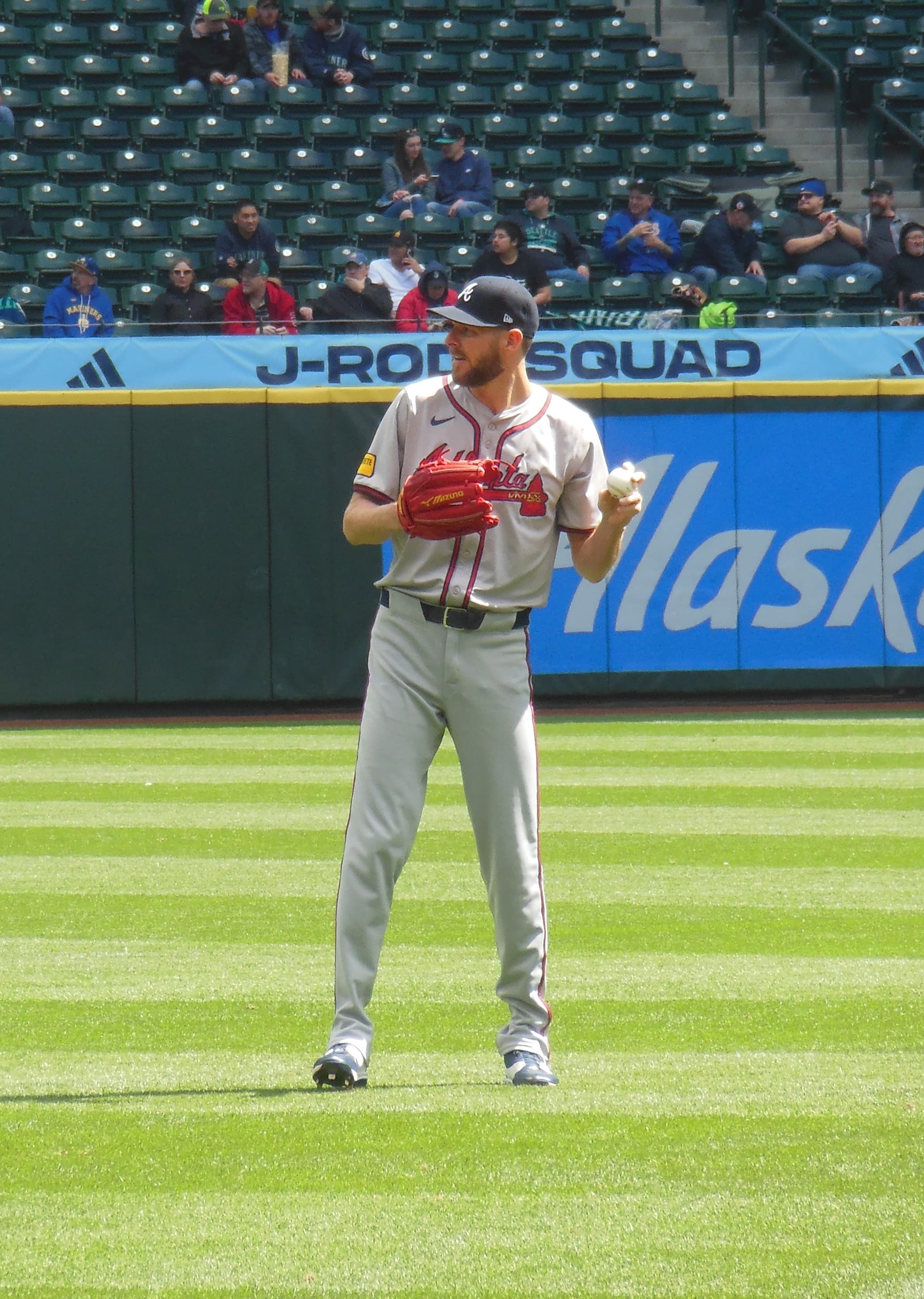
The Right Defense for the Wrong Problem
JustBaseball's case for Anthopoulos's trade deadline restraint holds up on the pitching numbers. The problem is that pitching was never the problem.
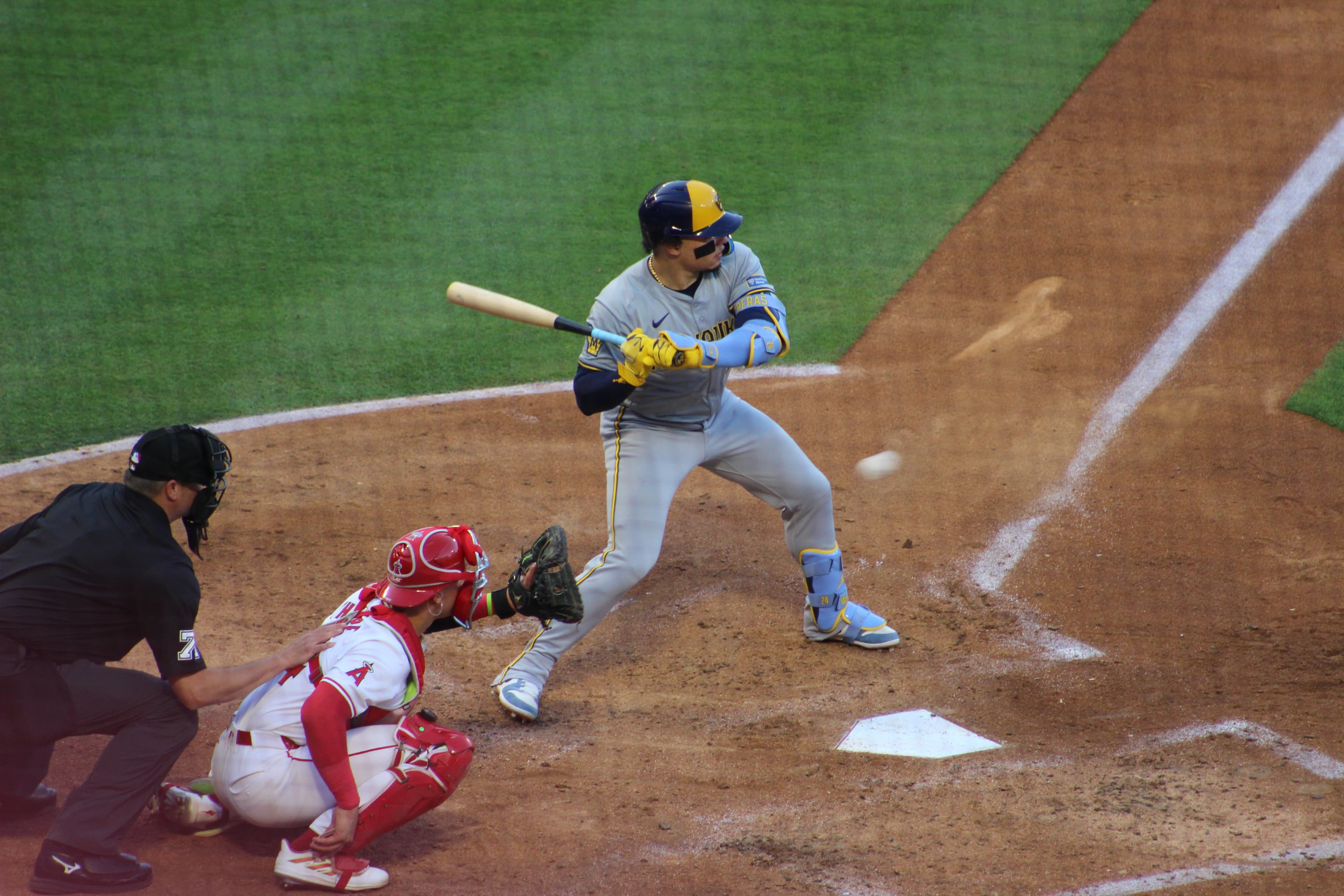
Ellis Magnolia: Eight Hits and One Run
Chris Sale threw his sixth straight quality start and lost for the third time in a row. The diagnosis arrived on schedule — and the former Brave who drove in the winning run made it personal.
The Braves Don't Deserve Chris Sale
Sale has a 2.16 ERA and the Braves are 6-6 in his last twelve starts because the offense won't score. Ha-Seong Kim is hitting .066 -- the worst batting average in MLB history.