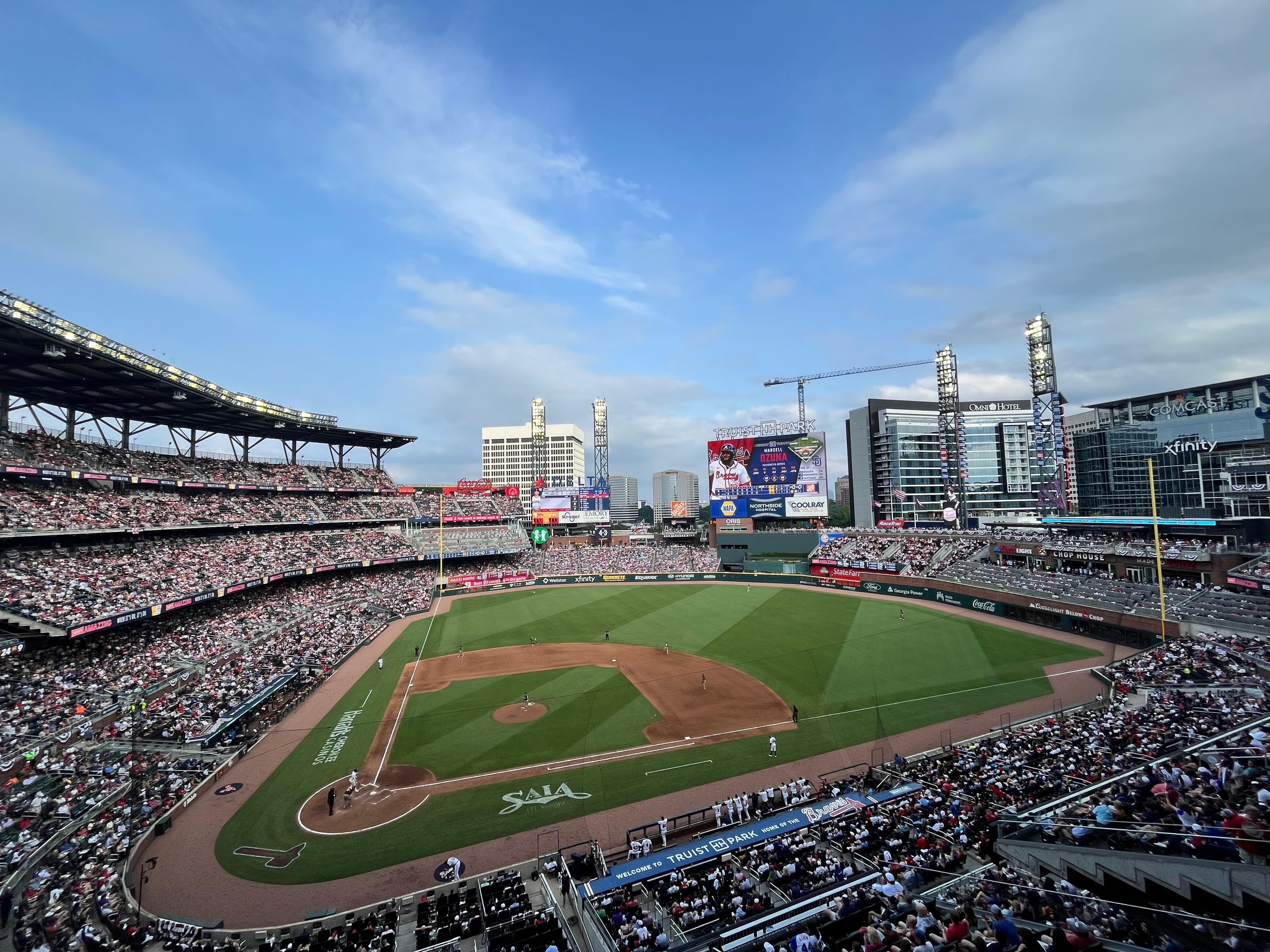
 Photo by TarheelBornBred, CC0 1.0, via Wikimedia Commons
Three Innings, Zero Strikeouts
The best bullpen in baseball gave up seven runs in one inning. That's not a crisis. It's a symptom.
After one inning at Truist Park on Thursday, the Braves led 5-3. Both starting pitchers had absorbed damage — Dustin May recorded two outs for the Cardinals, surrendering five runs on five hits, and Hurston Waldrep gave up three runs including Jordan Walker's two-run homer. The game belonged to the bullpens.
One bullpen answered. The other did not.
Justin Bruihl, Ryan Fernandez, Griffin Graceffo, JoJo Romero, and Gregory Soriano — five arms that solve no one's trivia — combined for 7.1 innings, three hits, and zero runs. They held the Braves scoreless for the final eight innings. They did it by doing the simplest version of their job: get the ball, throw strikes, go home.
The Braves' bullpen entered this same game with the best ERA in Major League Baseball. A 3.12 mark across 312 innings pitched. The best relief corps in baseball.
They held the 5-3 lead through the sixth. And then the seventh arrived.
Tyler Kinley started the inning. Nathan Church's two-run home run — 392 feet to right center — erased the lead. What followed was worse. Dylan Lee entered and surrendered three hits and three runs in a third of an inning. By the time Ian Hamilton stemmed the damage, the Cardinals had scored seven times. The Braves' bullpen, across the entire frame, struck out zero batters.
Zero.
The best relief corps in baseball could not miss a single bat in the inning that decided the game. That is a sentence worth sitting with.
Waldrep deserves a paragraph divorced from the noise that followed him. After the rocky first, he allowed two hits and no runs over his final four-plus innings. His line — 5.1 innings, five hits, three earned runs, four strikeouts — reads as a quality outing from a young arm doing exactly what a rotation piece should do: keep the team in the game and hand the ball to the bullpen with a lead.
The bullpen received the handoff and let it shatter on the mound.
Yesterday I identified two mid-rotation arms as the trade deadline need. Someone to pitch the sixth and seventh. Someone to absorb innings on a fifth day. The argument was never about bullpen talent — it was about bullpen workload. The Braves have been asking their relievers to cover four-plus innings per game since Spencer Strider went on the sixty-day IL and the rotation behind Chris Sale began posting earned run averages north of six.
Thursday night did not change that argument. It illustrated it in red ink.
Elsewhere in the box score: Matt Olson went 0-for-3. Austin Riley went 1-for-4 and is batting .208 through eighty-four games, which has long since stopped being a slump and started being a season. Dominic Smith, filling the designated hitter role with the quiet competence of a man who knows his name is on no one's jersey, led the team with three RBI on one hit. The Braves scored five runs in the first inning and none in the final eight, which is the batting order's version of the same story the bullpen told.
The Braves are 50-34 and in first place. The Phillies, who went 38-18 to close a lead that felt permanent in April, remain within striking distance. Twenty-seven days until the trade deadline. The arms that have carried this team all season just told the front office what the rotation has been saying for weeks.
The answer was always the same. The volume just got louder.
The Tilt
The Braves' bullpen didn't fail because it lacks talent — it failed because the rotation has been asking it to carry weight no bullpen can sustain through a full season.
— Ellis Magnolia
What's your take?
Ellis Magnolia
Numbers & narrative — statistical depth worn lightly, literary pacing.
Keep Reading
First-Place Teams Don't Do This
The Braves' bullpen came into Thursday ranked first in baseball. They left the seventh inning having surrendered seven runs without recording a single strikeout.
Three Prescriptions and Twenty-Eight Days
The Braves know the rotation is broken. The argument now is over the cure — and the three schools of thought reveal as much about what you believe about this team as they do about any trade target.
Sixty-Nine Pitches and the Variable That Moved
Lopez threw his best start since April. The rotation crisis doesn't care about your best start. But the trade deadline math might.