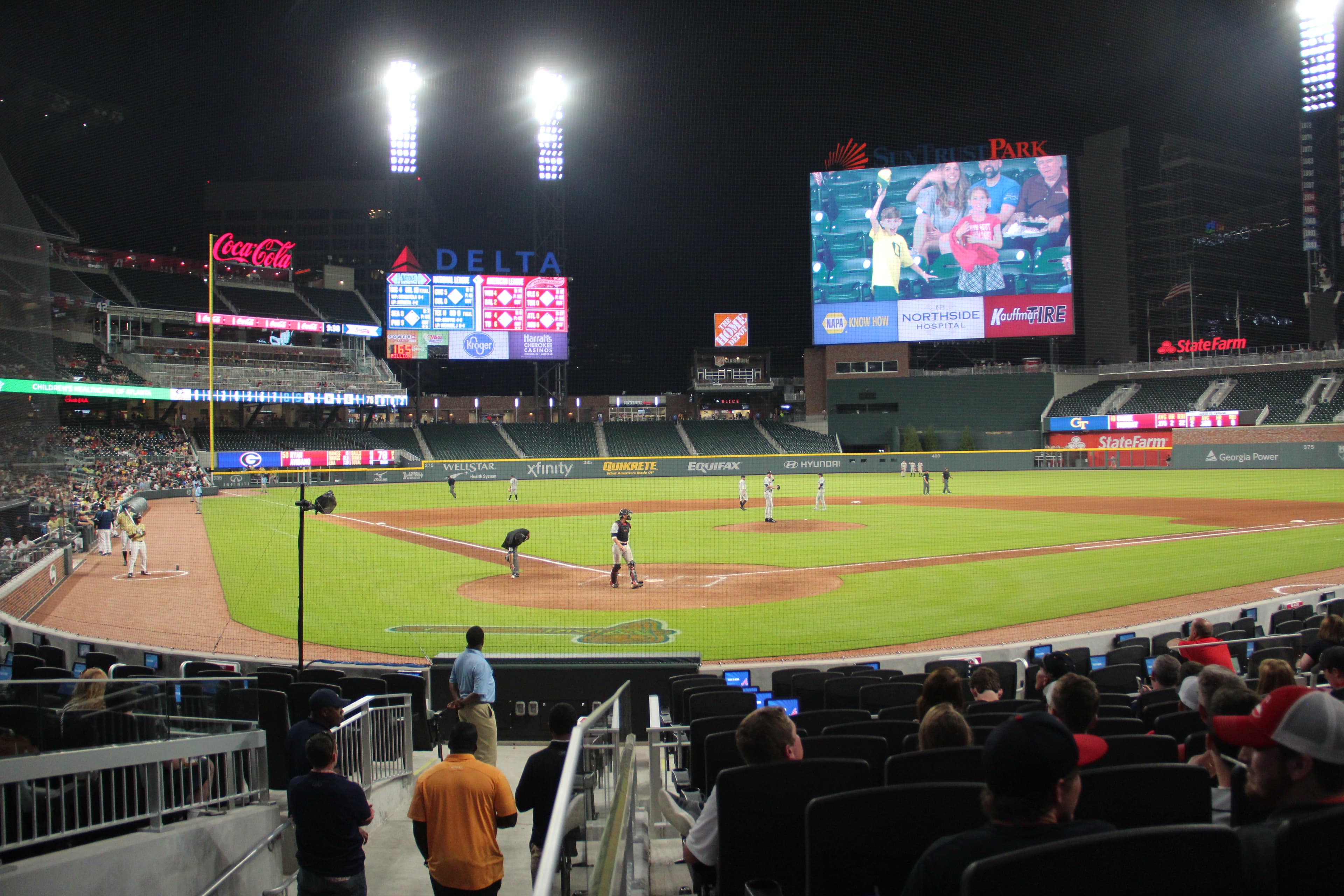
 Photo via Wikimedia Commons, CC BY-SA 4.0
Sixty-Nine Pitches and the Variable That Moved
Lopez threw his best start since April. The rotation crisis doesn't care about your best start. But the trade deadline math might.
Five days ago in this space, I watched Reynaldo Lopez throw 60 pitches against Washington and noted the distance between gesture and solution. Tonight he threw 69 — nine more pitches, one more inning, and the kind of outing that tempts you to revise the diagnosis.
I am not going to revise the diagnosis.
Lopez's line against St. Louis was genuinely impressive: 5.0 innings, two hits, one earned run, six strikeouts on 69 pitches. He was efficient, commanding, and — for the first time since April 7, when he struck out seven in 4.2 scoreless innings against the Angels — he looked like a starter rather than a reliever asked to extend. The changeup had late fade. The fastball sat 94. Jordan Walker singled home a run in the first, and after that the Cardinals managed nothing against Lopez for four innings. Seven consecutive batters struck out or popped up weakly between the second and fifth.
Here is the number that matters more than the line score: 69.
That is not a complete start. It is not meant to be — not yet, not five days after a 60-pitch outing, not for a pitcher who has not thrown more than three innings in any appearance since April. Lopez's recent history is a succession of short outings: 1.0 innings here, 2.0 there, topping out at 3.0 against Milwaukee on June 21 and San Francisco five days later. Tonight was his first appearance longer than three innings in nearly three months. The Braves are building him back the way you rehabilitate a structure you do not entirely trust — carefully, provisionally, with a plan that only works if the structure cooperates.
The bullpen, naturally, covered the rest. Dylan Dodd threw a scoreless sixth. Didier Fuentes a scoreless seventh. Dylan Lee struck out two in the eighth. Raisel Iglesias closed it in the ninth. Four relievers, four innings, five strikeouts, zero runs. This is, by now, familiar arithmetic: the relief corps does what the rotation cannot, and the standings credit both equally.
The bats did just enough, and one bat did more than that. Ozzie Albies homered in the third — 380 feet to right-center, his 12th of the season — and doubled home Drake Baldwin in the first. Albies is hitting .274 with 44 RBIs, which makes him comfortably the most productive hitter in a lineup where several considerably more expensive players are not producing at that level. A three-run eighth inning provided insurance: Michael Harris II singled one in, Mauricio Dubon bunted one home, Austin Riley singled another. The Braves scored five runs. Three of them came in one inning against a reliever. This is not an offense announcing its return.
Riley's full line — 1-for-4, one RBI, two strikeouts — tells you nothing new about a hitter whose season average sits at .203. Matt Olson went 0-for-4. These are not slumps. They are trends with 83 games of evidence, and tonight neither confirmed nor denied anything this morning's piece had not already laid out.
This morning I argued that the Braves need two mid-rotation arms — that the deadline equation is depth, not a moonshot. Tonight does not change the equation. What it does, carefully and provisionally, is adjust one variable.
If Lopez can build from 69 pitches to 85, from five innings to six, over the next three or four starts, the Braves' deadline math shifts from needing three reliable starters to needing two. That is a meaningful difference in prospect cost, in market flexibility, in how aggressively Alex Anthopoulos needs to move. One functional internal arm transforms a desperate trade position into a surgical one.
But that is a conditional sentence, and conditional sentences are what front offices use when they do not want to admit they are gambling. Lopez is 32. He has been on the IL twice in two years. His season line — 3.47 ERA across 56.2 innings, only seven starts in 20 appearances — describes a pitcher who has been effective in short bursts and unavailable in long ones. A sample of one excellent start does not override a sample of four months.
There are 27 days until the deadline. The Braves are 50-33. They won tonight because Albies hit a ball 380 feet and four relievers combined for four scoreless innings — which is to say they won the way they have been winning since May, with individual excellence and organizational depth covering for a rotation that cannot yet stand on its own.
Lopez was excellent tonight. He was also excellent inside a framework that required four pitchers to finish what he started.
One good start. Twenty-seven days. The variable moved. The equation did not.
The Tilt
One dominant Lopez start in July doesn't change a trade deadline prescription written over four months of evidence.
— Ellis Magnolia
What's your take?
Ellis Magnolia
Numbers & narrative — statistical depth worn lightly, literary pacing.
Keep Reading
First-Place Teams Don't Do This
The Braves' bullpen came into Thursday ranked first in baseball. They left the seventh inning having surrendered seven runs without recording a single strikeout.
Three Innings, Zero Strikeouts
The best bullpen in baseball gave up seven runs in one inning. That's not a crisis. It's a symptom.
Three Prescriptions and Twenty-Eight Days
The Braves know the rotation is broken. The argument now is over the cure — and the three schools of thought reveal as much about what you believe about this team as they do about any trade target.